

Shocking data reveals that 97% of motor vehicle crashes stem from driver error. This statistic highlights the critical need for advanced safety technology in modern cars.
Front-impact collisions make up 54% of all auto accidents. Distracted driving causes 89% of rear-end crashes. These numbers show why forward-facing safety systems are essential.
Advanced Driver Assistance Systems serve as proactive safety nets. They complement driver awareness with sophisticated sensors and automatic responses. These technologies address the most common accident types through real-time monitoring.
Our expertise confirms that properly calibrated ADAS systems significantly reduce accident frequency and severity. For professional ADAS services, call ADAS of New England at 1-888-970-2327.
This technology represents the evolution beyond basic safety features like seat belts. It provides crucial protection against human error on today’s roads.
Understanding Collision Prevention Technology
Modern automotive safety has evolved beyond basic protection features. Today’s vehicles employ sophisticated networks that actively work to prevent accidents before they occur.
These advanced systems create a digital safety cocoon around your car. They constantly monitor your driving environment using multiple detection methods.
How ADAS Systems Work to Avoid Accidents
Advanced Driver Assistance Systems operate through continuous environmental scanning. Multiple sensor types work together to identify potential hazards.
Our expertise shows that proper system integration is crucial for effectiveness. These technologies process real-time data to assess risk levels.
Ultrasonic sensors employ echolocation principles similar to marine animals. They emit sound waves that bounce off nearby objects.
Electromagnetic sensors create detection fields around the vehicle. These are particularly effective for identifying moving objects at various speeds.
The Role of Sensors and Cameras in Modern Vehicles
Camera systems provide visual monitoring of the road environment. They work alongside radar and LiDAR for comprehensive coverage.
This combination creates 360-degree protection around your vehicle. Each sensor type has specific strengths for different scenarios.
Intel describes this process as “sensor fusion and situational analysis.” Multiple data inputs are processed simultaneously for accurate threat assessment.
Automatic emergency braking represents the most direct intervention level. It activates when sensors determine imminent impact risk.
Our technical team emphasizes that precise calibration maintains detection accuracy. Properly maintained systems significantly enhance driving safety.
Key ADAS Features for Preventing Front-Impact Collisions
Frontal impacts represent the most frequent accident scenario on American roads. Our technical analysis confirms these systems receive priority development due to their life-saving potential.
Advanced technologies work together to create comprehensive frontal protection. They address different stages of potential impact situations.
Forward Collision Warning Systems
These alert systems serve as your first line of defense. They monitor the distance between your vehicle and others ahead.
Our research shows these systems use radar and camera combinations. They provide warnings through sound, vibration, or visual signals.
This technology gives drivers crucial extra reaction time. It significantly enhances situational awareness on busy roads.
Automatic Emergency Braking (AEB)
This technology represents the next evolution in impact avoidance. It activates when drivers don’t respond to initial warnings.
Twenty major automakers committed to making AEB standard by 2022. IIHS studies demonstrate 50% fewer rear-end crashes with this system.
Our data confirms NHTSA projects 28,000 preventable collisions annually. This technology represents a massive leap in automotive safety.
Adaptive Cruise Control
This intelligent system maintains your set speed while monitoring traffic. It automatically adjusts your vehicle’s pace to maintain safe distances.
Our technical assessment shows it works alongside other safety features. The system provides seamless speed management during highway driving.
Front cross-traffic alert enhances intersection safety. It detects approaching vehicles from side angles where visibility is limited.
These technologies represent the most developed aspect of modern vehicle safety. They work sequentially from warning to automatic intervention when needed.
Side Impact Protection Through Advanced Technology
While frontal impacts dominate accident statistics, side collisions demand equally advanced safety approaches. Our technical analysis reveals these incidents often occur with less warning time.
Modern vehicles employ sophisticated lateral protection systems. These technologies work alongside frontal safety features for comprehensive coverage.
Blind Spot Monitoring and Warning
Blind spot monitoring systems detect vehicles in areas not visible through mirrors. They provide crucial alerts when changing lanes becomes unsafe.
Our expertise confirms these systems use radar and ultrasonic sensors. They create detection zones along both sides of your vehicle.
Warning signals typically appear in side mirrors or dashboard displays. This technology significantly enhances lane change safety.
Lane Departure Warning Systems
Lane departure warning technology relies on camera systems tracking road markings. It detects unintentional drifting from your lane position.
Our data shows these systems reduce lane departure crashes by 26.1%. They also decrease serious injuries by 20.7% according to NHTSA reports.
These systems require visible road markings to function properly. They include override functions when drivers intentionally use turn signals.
Advanced versions progress from warnings to active steering correction. This occurs when drivers don’t respond to initial alerts.
Cross-Traffic Alert Features
Cross-traffic alert features specifically address parking lot and intersection scenarios. They represent crucial protection against side impacts.
These systems use radar sensors to detect approaching vehicles. They provide auditory and visual warnings to the driver.
Our technical assessment shows particular effectiveness in low-speed situations. This technology complements rear cross-path detection systems.
Proper calibration ensures accurate detection of moving objects. This maintains system reliability in various driving conditions.
Rear Collision Avoidance Systems
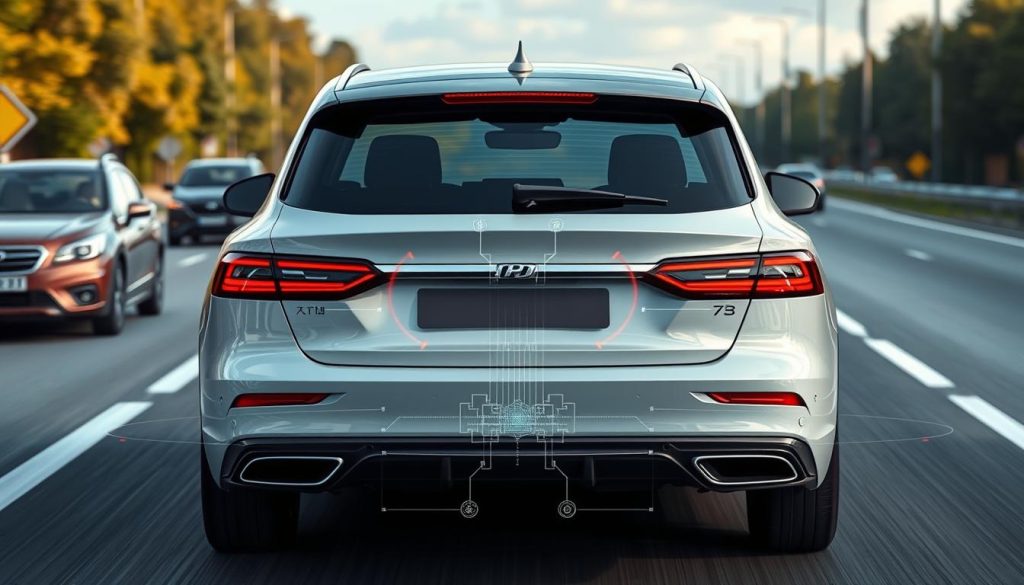
Complete 360-degree vehicle protection requires equally advanced rear safety systems. These technologies address the unique challenges of backing up and rear-impact scenarios.
Our expertise confirms that rear protection systems have evolved significantly in recent years. They now provide comprehensive coverage where traditional mirrors and visibility fall short.
Backup Cameras and Rear Visibility Technology
Since 2018, NHTSA mandates rear visibility technology in all new vehicles under 10,000 pounds. This regulation addresses the critical blind zones directly behind your car.
Backup cameras provide real-time visual coverage of areas invisible through mirrors. They significantly enhance driver awareness during reversing maneuvers.
Our technical assessment shows these systems work alongside ultrasonic sensors. This combination creates a comprehensive rear detection network.
Rear Cross-Path Detection
Rear cross-path detection specifically addresses backing out of parking spaces. This technology identifies approaching traffic from either side while reversing.
These systems use radar sensors to monitor cross-traffic movement. They provide audible and visual warnings when vehicles approach your path.
Our data shows particular effectiveness in crowded parking lots. This technology complements the capabilities of backup camera systems.
Park Assist Technology
Park assist represents the most automated aspect of rear safety systems. It provides both guidance and sometimes automatic steering during parking maneuvers.
Advanced versions can automatically parallel park or back into spaces. These systems use the same sensor technologies applied throughout the vehicle.
Like other ADAS features, these systems benefit from precise calibration. LiDAR technology contributes to their accuracy by creating detailed 3D environmental maps.
This completes the comprehensive protection around modern vehicles. Rear systems work seamlessly with front and side technologies for total safety coverage.
Practical Tips for Maximizing Your ADAS Effectiveness
Advanced safety technologies provide exceptional protection when properly maintained and understood. Our expertise shows that optimal performance requires both technical care and driver awareness.
These systems work best when integrated with smart driving habits. We recommend a comprehensive approach to vehicle safety that combines technology with human responsibility.
Maintaining Your Vehicle’s Safety Systems
Clean vehicle exteriors are essential for proper sensor function. Dirt, snow, or damage to bumper areas can degrade performance significantly.
Our technical team emphasizes regular inspection of sensor locations. These components require clear surfaces to accurately detect objects and measure distance.
Tow bars and bicycle racks may interfere with ultrasonic sensors. Electromagnetic systems handle these situations better when properly configured.
Professional calibration ensures your systems maintain intended accuracy. This service keeps all safety features operating at peak performance levels.
Combining Technology with Defensive Driving
Safety features supplement rather than replace attentive driving practices. The National Safety Council rightly states that you remain your car’s best safety feature.
These systems provide additional reaction time and warning signals. They work alongside your awareness to create comprehensive protection.
Defensive driving combined with advanced technology creates the safest approach. This combination addresses both human and environmental factors on the road.
Understanding System Limitations and Capabilities
Different manufacturers implement features with varying names and functionality. Consulting your owner’s manual helps you understand specific capabilities.
Lane departure systems require visible road markings to function properly. They may not work with faded or absent lane lines.
Some systems have difficulty judging distance from inclined or reflective surfaces. Plastic objects and certain weather conditions can affect sensor accuracy.
Resources like MyCarDoesWhat.org provide valuable education about safety features. Understanding both capabilities and limitations ensures proper system use.
This knowledge helps drivers make the most of their vehicle’s advanced safety technologies. Proper understanding enhances overall driving safety and accident avoidance.
Ensuring Optimal Performance with Professional ADAS Services
Your vehicle’s advanced safety systems need expert care to function properly. Professional calibration maintains precise sensor alignment after windshield replacement or suspension work.
IIHS research confirms that properly functioning automatic braking prevents up to 40% of front and rear crashes. Our technicians specialize in the precise alignment required for accurate distance measurement.
We integrate with telematics solutions like Geotab GO TALK and Mobileye for comprehensive fleet safety. Proper calibration reduces insurance claims by 15% according to IIHS data.
Trust our expertise to maintain your car’s collision prevention technology at peak performance. For professional ADAS services, call ADAS of New England at 1-888-970-2327.