

Did you know that Advanced Driver Assistance Systems (ADAS) need to be calibrated right? If not, it can increase the risk of accidents. As car tech gets better, knowing the difference between OEM and OE ADAS calibrations is key for safety and function.
At our place, we’re all about precise and reliable ADAS calibrations. We stress the importance of knowing the difference between OEM and OE to keep customers safe and happy.
Our team works hard to offer top-notch calibration services. We use our knowledge to help car owners and pros navigate the world of advanced driver assistance systems.
Understanding ADAS Technology and Its Importance
ADAS technology is key in making vehicles safer. It uses many systems to reduce risks on the road. We will explore how ADAS works and why it’s important in today’s cars.
What Are Advanced Driver Assistance Systems?
Advanced Driver Assistance Systems (ADAS) are advanced safety features in cars. They use sensors, cameras, and radar to watch the car’s surroundings. This gives real-time data to help avoid accidents.
Key components of ADAS include sensors and cameras. They work together to spot dangers and warn the driver or act on their own.

Common ADAS Features in Modern Vehicles
Today’s cars have many ADAS features. These include lane departure warning, adaptive cruise control, automatic emergency braking, and blind-spot monitoring. They make driving safer and more comfortable.
For example, lane departure warning systems tell drivers if they’re leaving their lane. Adaptive cruise control keeps the car at a safe distance from the one in front.
Why Proper Calibration Is Critical for Safety
Getting ADAS systems right is vital for their safety. Calibration sets up the sensors and cameras to work well. It makes sure they can spot and react to the car’s surroundings.
Wrong calibration can cause ADAS to fail, leading to accidents. So, it’s important to follow calibration standards and the maker’s ADAS calibration procedure. This keeps the car safe.
Defining OEM and OE in the Automotive Context
Exploring automotive ADAS, it’s key to know the OEM and OE differences. These terms help us grasp the calibration of Advanced Driver Assistance Systems.
What Does OEM (Original Equipment Manufacturer) Mean?
The term OEM means the maker of a vehicle or part. For ADAS calibrations, OEM specs come from the car’s maker. These specs are vital for correct calibration.
What Does OE (Original Equipment) Mean?
OE stands for the original parts in a car by its maker. In ADAS calibrations, OE parts are those fitted by the maker. Knowing the difference between OE and aftermarket parts is key for precise calibration.
Key Distinctions Between OEM and OE Terminology
The main difference is in scope. OEM is about the maker and their specs. OE is about the parts themselves. For ADAS calibrations, sticking to OEM specs ensures the system works as the maker intended. Using OE parts keeps the car’s original design and function intact.
Our team stresses the need to understand these differences for accurate ADAS calibration. By following OEM standards and using OE parts, we make sure your car’s safety features work right.
The Fundamentals of ADAS Calibrations
At the heart of vehicle safety lies the precise calibration of ADAS systems. These systems use sensors, cameras, and radar to work right. Calibration is key to keeping vehicles safe and reliable.
Why ADAS Systems Require Calibration
ADAS systems need calibration to work together well. Proper calibration is essential for the accurate functioning of features like lane departure warning, adaptive cruise control, and automatic emergency braking. Without it, these systems can fail, posing risks on the road.
Our experience shows that calibration is needed after events like windshield replacement or a collision. Even small changes to a vehicle’s alignment can require recalibration.
Types of Calibration Procedures: Static vs. Dynamic
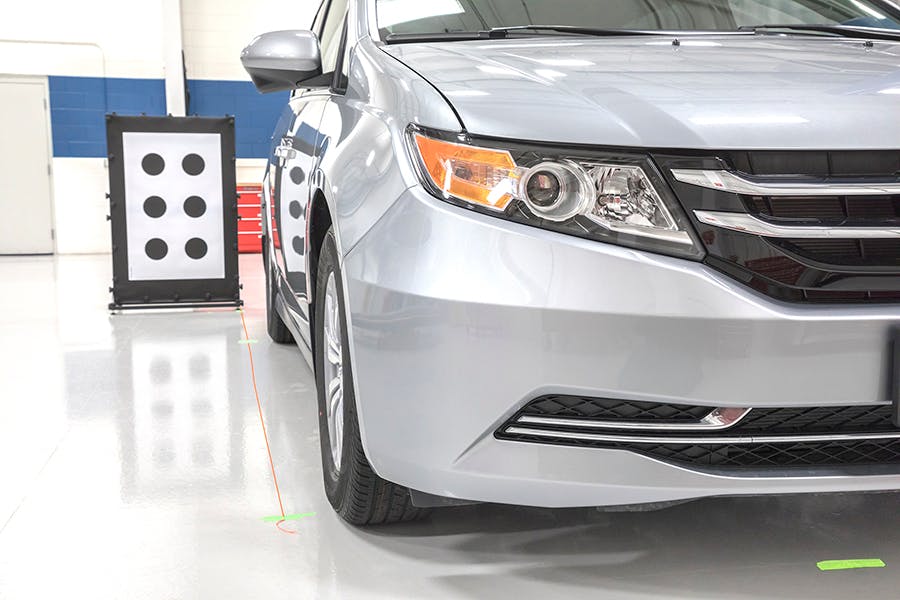
There are two main types of ADAS calibration procedures: static and dynamic. Static calibration uses specific targets and equipment in a controlled setting. It’s often for cameras and sensors needing precise alignment.
Dynamic calibration is done while the vehicle moves. This method is for systems needing real-time data, like adaptive cruise control. It ensures the system can handle changing road conditions.
Events That Trigger the Need for Recalibration
Several events can trigger the need for ADAS recalibration. These include:
Windshield replacement: Replacing a windshield often requires recalibrating the cameras and sensors attached to it.
Collision or accident: Even minor collisions can affect the alignment of ADAS components, necessitating recalibration.
Alignment adjustments: Changes to a vehicle’s alignment can impact the accuracy of ADAS systems.
Understanding these basics helps ensure ADAS systems work right. This keeps modern vehicles safe and reliable.
OEM ADAS Calibration: Process and Requirements
OEM ADAS calibration is key. It uses methods and tools approved by the maker. This process is complex and needs precision and strict standards.
Manufacturer-Specific Calibration Protocols
Car makers create special protocols for ADAS calibration. These steps are detailed and must be followed carefully by technicians.
Key aspects of these protocols include: precise alignment, specific software updates, and thorough testing to check system function.
Equipment and Tools Used in OEM Calibrations
The tools for OEM ADAS calibrations are special and differ by car maker. Technicians use advanced calibration tools made for each car model.
These tools help in precise calibration, giving the needed precision and control.
Documentation and Verification Standards
Keeping detailed records is vital in OEM ADAS calibration. Technicians must document all calibration steps, including any changes and test results.
Verification standards make sure ADAS systems work as the maker intended. This ensures the car is safe and runs well.
OE ADAS Calibration: Approach and Methodology
OE ADAS calibration services need a deep look into the technical details and calibration steps set by the car maker. Our method for OE ADAS calibration focuses on grasping these details. This ensures the calibration fits the exact needs of the car’s advanced driver assistance systems.
Differences Between OE and OEM Calibrations
The main difference between OE and OEM ADAS calibrations is how they approach and meet the car maker’s standards. OE calibrations stick to the original equipment specs, which might not always match the OEM’s own calibration methods. Our team knows how to handle these differences to offer calibrations that meet the needed standards.
Equipment and Tools for OE Calibrations
The tools and equipment for OE ADAS calibrations are picked based on the car’s OE specs. We use the latest technology for our calibration services. This includes special software and hardware to work with the car’s ADAS systems.
Quality Assurance in OE Calibration Processes
Quality assurance is key in our OE ADAS calibration services. We use strict testing and verification steps to make sure the calibration is precise and reliable. Our quality checks ensure the calibration meets the OE specs. This gives our clients confidence in their vehicle’s ADAS systems’ safety and performance.
Technical Differences in ADAS Calibrations Between OEM and OE
OEM and OE ADAS calibrations differ in many ways. These include software, hardware, and calibration targets. Knowing these differences is key to ensuring ADAS systems work safely and well.
Software and Programming Variations
OEM ADAS calibrations use special software and protocols. These are made to keep ADAS systems working as the car maker intended.
OE ADAS calibrations might use more common software. This software works with many OE parts. This can cause differences in how ADAS systems are set up and work.
Hardware Compatibility Considerations
Hardware is another area where OEM and OE ADAS calibrations differ. OEM calibrations need specific tools made just for the car’s ADAS systems.
OE calibrations might use similar hardware but with more flexibility. This can change how the calibration is done.
Calibration Target Specifications
Calibration targets also vary between OEM and OE ADAS calibrations. OEM calibrations stick to strict targets set by the manufacturer. This ensures precise calibration.
OE calibrations might use more general standards. While effective, these might not be as precise as OEM targets.
Our study shows why it’s vital to understand these technical differences. It ensures ADAS calibrations are done right. This keeps vehicles safe and performing well.
Technician Training and Certification for ADAS Calibrations
Proper technician training is key for accurate ADAS calibration. As cars get more advanced, skilled technicians are needed more than ever. They must know how to calibrate these complex systems right.
OEM-Specific Training Requirements
Training for each car maker is vital. Our programs teach technicians how to calibrate cars accurately. They learn about the car’s special tech, how to calibrate it, and use the right tools.
OE Calibration Certification Programs
OE certification teaches about ADAS technology broadly. These programs cover many ADAS features and calibration tools. With this certification, technicians can work on different car brands.
Ongoing Education and Skill Development
ADAS calibration keeps changing with new tech. Technicians must keep learning to stay up-to-date. They need to take advanced courses and workshops on new ADAS tech and methods.
By focusing on training and certification, we make sure ADAS calibrations are top-notch. This boosts car safety and performance.
Cost and Warranty Implications: OEM vs. OE Calibrations
Choosing between OEM and OE ADAS calibrations affects your wallet and warranty. We’ll explore the costs and warranty impacts of these options. This will help you understand what to expect.
Pricing Structures and Average Costs
ADAS calibration prices differ between OEM and OE services. OEM calibrations use specific manufacturer protocols and tools, increasing costs. Prices for OEM range from $500 to $1,200, based on the vehicle.
OE calibrations are often cheaper, costing between $300 and $900. Yet, they might not meet the vehicle maker’s strict standards.
Insurance Coverage Considerations
Insurance for ADAS calibrations can be tricky. Some insurers cover OEM calibrations, while others only approve OE. Always check your insurance before getting a calibration.
Insurance policies vary a lot. Knowing your coverage helps avoid surprise costs.
How Calibration Choices Affect Vehicle Warranties
Choosing OEM or OE calibrations affects your warranty. OEM calibrations keep your vehicle in line with the maker’s standards, protecting your warranty.
OE calibrations might void some warranty terms, depending on the maker’s rules. Always talk to your dealer or maker about warranty impacts of your choice.
By weighing these factors, you can make a choice that fits your budget, quality needs, and warranty concerns.
Choosing the Right ADAS Calibration Service for Your Vehicle
Choosing the right service for ADAS calibrations is vital. It ensures your car’s safety features work right. Our team will help you through this process.
When OEM Calibration Is Recommended
OEM calibration is best for cars needing specific safety standards. This is true for newer cars or those with advanced ADAS features.
OEM calibration follows the car maker’s exact rules. This means your car’s safety and performance are top-notch.
Scenarios Where OE Calibration May Be Appropriate
OE calibration might work for some cars. This is when the car doesn’t need the OEM’s special settings or if you’re watching your budget. But, it’s key to check if the OE calibration meets safety and performance standards.
Our team checks each car’s needs. We decide if OE calibration is right, keeping safety first.
Questions to Ask Your Service Provider
When picking a calibration service, ask these questions:
- What type of calibration do they offer (OEM vs. OE)?
- What equipment and tools do they use?
- Are their technicians certified and trained for ADAS calibrations?
- Can they provide documentation and verification of the calibration performed?
These questions help you choose wisely. They make sure your car gets the right calibration service.
The Future of ADAS Calibration Technology and Standards
Vehicles are getting smarter, and ADAS calibration technology is changing fast. We’re seeing big steps forward in making sure cars are safe. This is thanks to new ways of calibrating systems.
New standards for ADAS calibrations are key to keeping up with car tech. Car makers are teaming up to set these standards. This helps service providers give top-notch calibration services.
New tools and software for calibration are leading the way. They make ADAS calibrations more accurate and quicker. We’re always learning about the latest in these areas to offer the best services.
The future of ADAS calibration looks bright. There’s a lot of research going on to make cars safer and better. We’re committed to keeping up with these advancements to provide top-notch calibration services.